
Introduction: Why AI specifications matter
AI Phone Specifications 2026 are relatively simple. Shoppers compare processor speed, RAM, camera megapixels, screen size, and battery capacity. Those specifications still matter, but modern smartphones are adding another important layer: artificial intelligence.
Today, a phone may use AI to improve photographs, remove unwanted objects, translate conversations, summarize notes, recognize voices, manage battery performance, and personalize the user experience. However, not every phone marketed as an AI phone offers the same capabilities. Some devices rely mainly on cloud-based services, while others can process important tasks directly on the phone.
That is why buyers should look beyond marketing labels. The most useful specifications to understand are the Neural Processing Unit, or NPU, on-device AI capability, RAM, battery technology, and the complete chipset design.
The best AI phone is not necessarily the device with the highest number in one category. It is the phone that combines efficient hardware, useful software, dependable battery life, strong privacy features, and long-term update support.
What is an AI phone?
An AI phone is a smartphone designed to use machine-learning features throughout the operating system, camera, communication tools, and everyday apps. These features can include voice recognition, live translation, smart photo editing, writing assistance, call screening, image enhancement, and personalized recommendations.
A genuine AI phone usually combines three elements:
- AI-capable hardware, such as an NPU inside the chipset.
- Software designed to use that hardware efficiently.
- Practical AI features that provide a clear benefit to the user.
A phone does not become powerful simply because its advertisements mention AI. Buyers should check whether the advertised features work offline, which apps support them, and whether they are available in the buyer’s region and language.
What is an NPU in a smartphone?
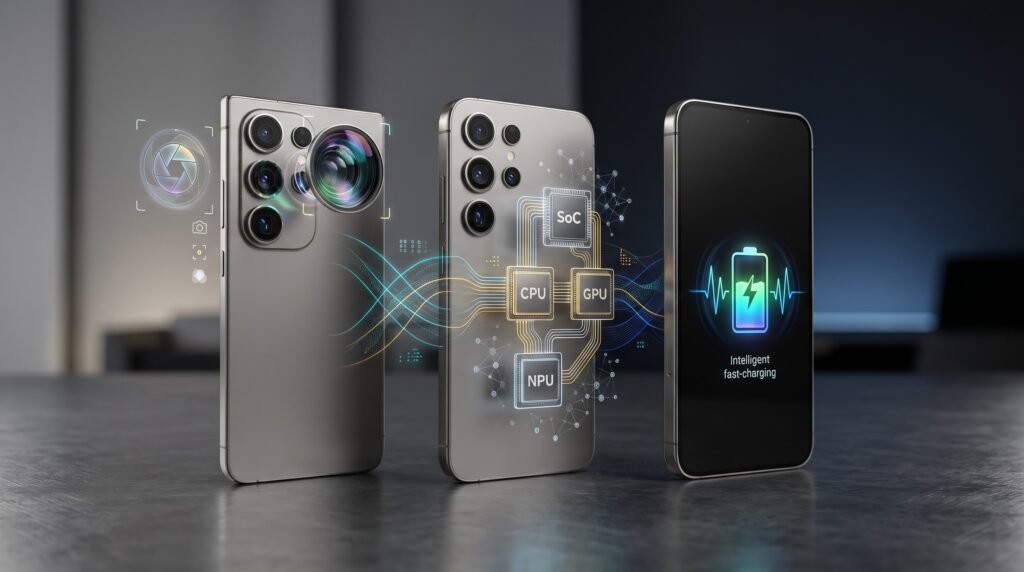
NPU stands for Neural Processing Unit. It is a specialized processor designed to handle artificial intelligence and machine-learning workloads.
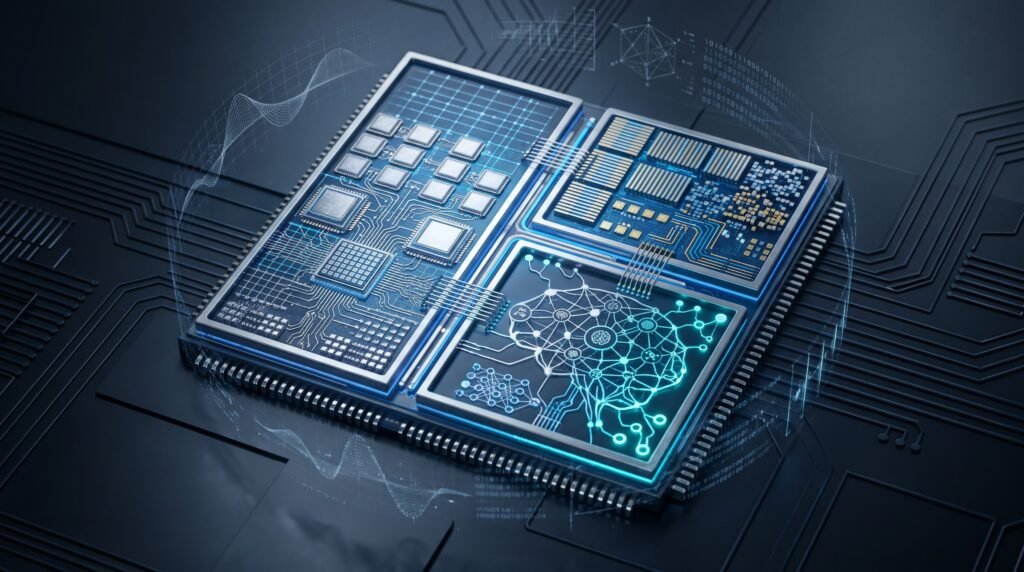
- CPU: Handles general tasks such as opening apps, processing instructions, and running the operating system.
- GPU: Handles graphics, gaming, animation, and other parallel visual workloads.
- NPU: Handles AI operations such as image recognition, voice processing, translation, and generative AI functions.
Without a dedicated NPU, a phone may still run AI applications using its CPU or GPU. However, specialized hardware can make AI tasks faster and more efficient. It can also reduce the amount of data that needs to be sent to remote servers.
Think of the NPU as a specialist inside the chipset. The CPU is a general problem-solver, the GPU is highly capable with graphics and parallel calculations, and the NPU is optimized for neural-network operations.
Why NPU performance matters to smartphone buyers
NPU performance can affect several features that people use every day. In the camera app, an NPU may help identify subjects, improve skin tones, reduce noise, detect faces, and combine several frames into a better final image.
In communication apps, it may support live transcription, translation, voice isolation, and call-quality improvements. In productivity tools, it can help with summarization, writing suggestions, document scanning, and note organization.
An NPU can also improve privacy. If a task is processed directly on the phone, the user may not need to upload the related photo, voice recording, or message to a cloud server. Local processing can also reduce delays when the phone has a weak or unavailable internet connection.
However, buyers should not compare NPU performance using one number alone. Manufacturers may measure AI performance differently, and a high theoretical figure does not guarantee a better user experience. Check the actual features, supported languages, offline functionality, and software quality.
On-device AI versus cloud AI
One of the most important questions is where AI processing takes place.
On-device AI
- Faster response times for supported tasks
- Better privacy for sensitive information
- Functionality without an internet connection
- Lower dependence on external servers
- More consistent performance when travelling
On-device AI is especially useful for camera processing, voice commands, face recognition, keyboard suggestions, and some translation or summarization tools.
Cloud AI
Cloud AI sends information to remote data centers for processing. Cloud systems can use much larger computing resources and may support more complex tasks. They are often useful for advanced generative features, large documents, detailed image creation, or services that require substantial processing power.
The disadvantages are that cloud AI normally requires an internet connection and may involve sending data away from the phone. There may also be delays, service restrictions, subscription requirements, or regional limitations.

The ideal smartphone may use a hybrid approach. Simple and sensitive tasks can happen on the device, while more demanding tasks can use the cloud when the user allows it.
How much RAM does an AI phone need?
RAM, or random access memory, temporarily stores the apps and data that a phone is actively using. More RAM can help a phone keep more apps open and switch between demanding tasks without reloading them.
For many general users, 8GB of RAM can be sufficient for messaging, browsing, video streaming, photography, banking, and social media. 12GB of RAM provides more room for heavy multitasking, advanced camera tools, gaming, and AI applications. 16GB or more may benefit power users who regularly edit video, play demanding games, use desktop-style features, or run several large apps together.
More RAM does not automatically make every phone faster. Memory management, processor design, storage speed, cooling, and software optimization also matter. A well-optimized phone with 8GB of RAM may feel smoother than a poorly optimized phone with 16GB.
Buyers should also consider storage. AI features, high-resolution video, offline language packs, and large applications can consume storage quickly.
Why the chipset matters more than one specification
The chipset is the central platform that brings together the CPU, GPU, NPU, image signal processor, modem, and other important components. This means buyers should evaluate the entire chipset rather than focusing only on CPU clock speed or an NPU rating.
- CPU performance for everyday responsiveness
- GPU capability for gaming and graphics
- NPU performance for AI workloads
- Image signal processor quality for photography
- Modem efficiency for mobile data and battery life
- Thermal management during long workloads
- Manufacturing efficiency and power consumption
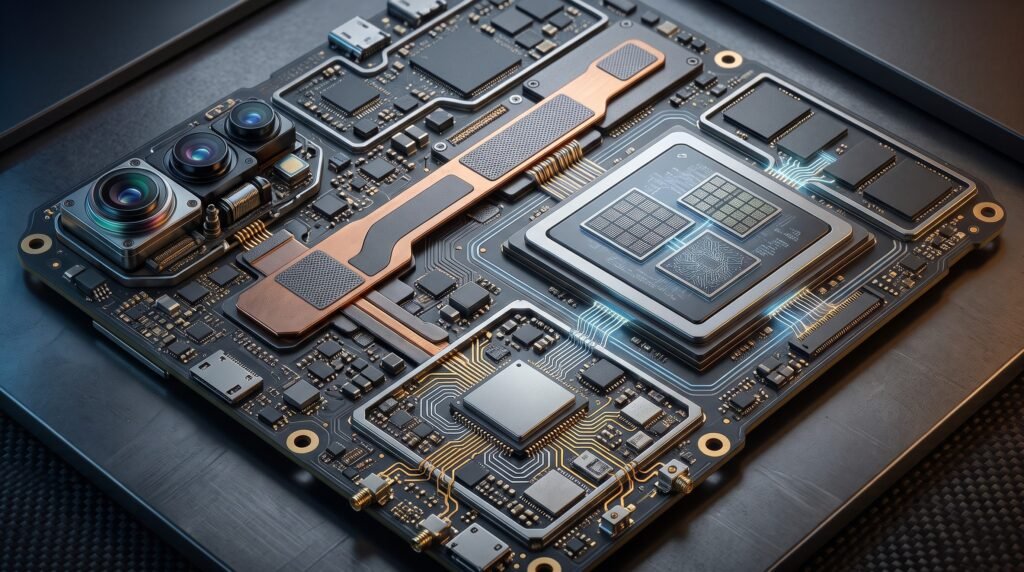
A balanced chipset can deliver better real-world performance than a chip that is extremely powerful in only one area. Efficient cooling is also essential. A phone that performs well for five minutes but becomes hot and slows down may not be ideal for gaming, video recording, or continuous AI processing.
Battery capacity and AI efficiency
Battery capacity is usually measured in milliamp-hours, but the number alone does not determine battery life. A phone with a large battery may still drain quickly if it has an inefficient display, power-hungry modem, poor background management, or an aggressive refresh rate.
AI can help improve battery performance by learning usage patterns and controlling background activity. It may reduce power consumption by predicting which apps will be needed, managing network activity, or adjusting performance based on the task.
- Battery capacity
- Chipset efficiency
- Display size and refresh rate
- Modem efficiency
- Charging speed
- Background software management
- Battery-health features
- Real-world endurance tests
Silicon-carbon batteries and future battery design
Silicon-carbon battery technology is receiving attention because it may allow manufacturers to place more energy capacity into a similar physical space. This can help phones offer longer battery life without becoming significantly thicker.
However, capacity should not be the only consideration. Buyers should also check charging behavior, heat management, battery-health controls, repair options, and independent battery testing.
Which AI camera specifications actually matter?
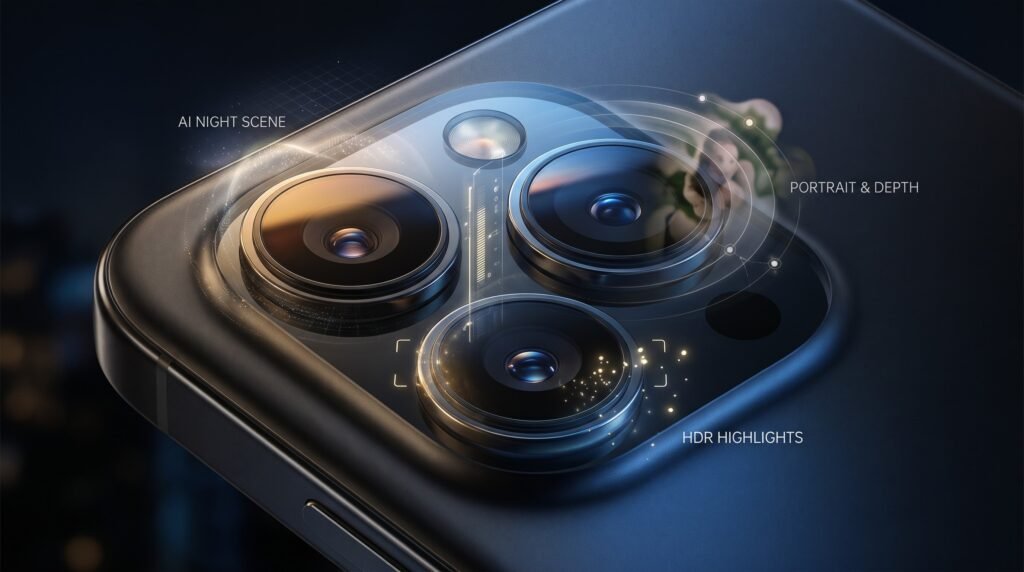
Camera marketing often focuses on megapixels, but AI photography depends on many other components. A phone with fewer megapixels can produce better images if it has a larger sensor, better stabilization, stronger image processing, and more reliable software.
- Main sensor size
- Optical image stabilization
- Lens quality
- Image signal processor
- NPU-assisted image processing
- Night photography performance
- HDR processing
- Portrait subject separation
- Video stabilization
- Autofocus speed
- Software update support
AI Phone Specifications 2026: AI can improve photos by recognizing scenes, balancing highlights and shadows, reducing noise, combining multiple frames, and separating subjects from backgrounds. Buyers should still look at sample images and independent reviews because AI processing can sometimes make photos appear unnatural.
A practical AI phone specification checklist
- Does the chipset include a dedicated NPU?
- Which AI features work without an internet connection?
- Are the AI tools available in my language and region?
- How much RAM does the phone have?
- Does it offer enough storage for apps, photos, videos, and offline AI data?
- How efficient is the chipset during gaming and camera use?
- What is the real-world battery performance?
- Does the phone support fast and protected charging?
- Does the camera use a good sensor, stabilization, and image processor?
- How many years of software and security updates are promised?
- Are important AI features locked behind a subscription?
- Can users control how their personal data is processed?

How to avoid AI marketing claims
The phrase “AI-powered” can describe anything from advanced local processing to a simple software filter. Buyers should look for specific explanations. Does the feature work offline? Does it require a separate account? Is it available after purchase, or only during a trial period? Is the phone using its NPU, or is the task being sent to a cloud service?
It is also useful to compare independent performance tests, battery reviews, camera samples, and long-term software support. A phone with slightly lower benchmark scores may be a better purchase if it provides useful features, stronger battery life, fewer restrictions, and longer update support.
Conclusion
AI phone specifications are becoming an important part of smartphone buying decisions. The NPU can accelerate machine-learning tasks, on-device AI can improve speed and privacy, RAM affects multitasking, and the chipset controls the balance between performance and efficiency.
Battery capacity remains important, but efficiency, display behavior, modem design, charging protection, and software optimization matter just as much. Camera quality also depends on sensor size, stabilization, image processing, and software rather than megapixels alone.
For most buyers, the best AI phone is not the one with the biggest numbers. It is the device that offers useful AI features, efficient performance, reliable battery life, strong privacy controls, high-quality cameras, and dependable software updates. Compare the complete experience, not just one specification.
Which AI smartphone specification matters most to you: the chipset, camera, battery, RAM, or privacy features? Share your preference in the comments and compare it with the specifications of your current phone.
Frequently Asked Questions
What is an NPU in a smartphone?
An NPU, or Neural Processing Unit, is a specialized processor designed for artificial intelligence and machine-learning tasks. It can help with camera processing, voice recognition, translation, image editing, and other AI features while using less power than a CPU may require for the same workload.
Do I need an AI phone in 2026?
You do not need an AI phone for basic calls, messaging, browsing, and video streaming. However, an AI-capable phone can be useful if you want advanced photography, live translation, voice tools, writing assistance, local processing, or longer-term software support.
How much RAM is enough for an AI phone?
For general users, 8GB is often enough. Buyers who multitask heavily, play demanding games, edit video, or use advanced AI tools may prefer 12GB or 16GB. RAM should always be considered together with chipset quality and software optimization.
Is on-device AI better than cloud-based AI?
Neither is always better. On-device AI usually offers faster responses, better privacy, and offline functionality. Cloud AI can handle more complex tasks because it uses powerful remote servers. A hybrid system can provide the benefits of both approaches.
Does a larger battery always provide better battery life?
No. Battery life also depends on the chipset, display, modem, software, refresh rate, background applications, and thermal management. A phone with a smaller battery may last longer if its hardware and software are more efficient.
Are more megapixels better for AI photography?
Not necessarily. Sensor size, stabilization, lens quality, image processing, and software can have a greater effect on image quality. Megapixels are useful, but they should not be the only camera specification you compare.
What is the difference between a CPU, GPU, and NPU?
The CPU handles general-purpose processing, the GPU focuses on graphics and parallel workloads, and the NPU is designed for AI and machine-learning operations.
Can AI features work without an internet connection?
Some can, especially when they are processed on the device. Other features require cloud computing and an active internet connection. Always check whether the manufacturer identifies a feature as offline or on-device.
What should I check before buying an AI smartphone?
Check the chipset, NPU capability, RAM, storage, battery performance, charging system, camera sensor, offline AI support, privacy controls, and software update policy. Also verify whether important features require a subscription.
Why are software updates important for AI phones?
Software updates can improve AI features, camera processing, security, compatibility, and battery management. A phone with strong hardware but short software support may become less useful over time.