
Article Excerpt
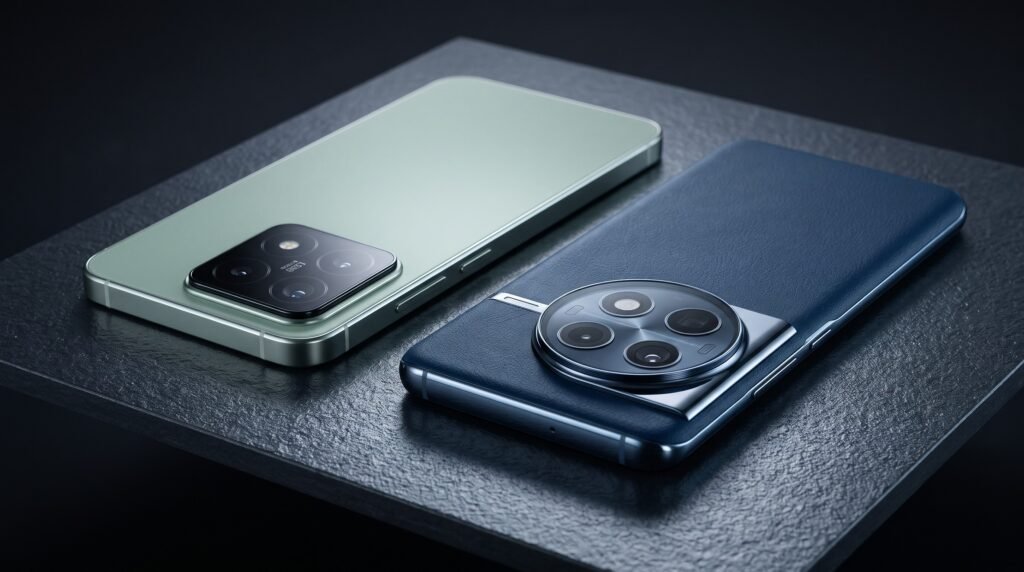
The premium value flagship segment has escalated into an uncompromising showdown between the Xiaomi 15 and the OnePlus 13. While both harness Qualcomm’s 3nm Snapdragon 8 Elite silicon, their physical execution differs fundamentally: Xiaomi delivers an ergonomic compact flagship with Leica optics, while OnePlus fields an expansive 6,000mAh powerhouse with Hasselblad color science and dual IP68/IP69 armor. Here is which device truly earns your investment.
Table of Contents
Xiaomi 15 vs OnePlus 13: Which Value Flagship Deserves Your Money?
The premium “value flagship” category has outgrown its historical compromises. Once defined by cost-cutting measures—such as plastic intermediate frames, inferior secondary sensors, and sluggish USB interfaces—today’s contenders deliver tier-one specifications at price tags significantly lower than conventional $1,200+ ultra-premium flagships.
At the forefront of this segment are the Xiaomi 15 and the OnePlus 13. Both devices represent the engineering muscle of their respective manufacturers, equipped with Qualcomm’s Snapdragon 8 Elite chipset built on TSMC’s 3nm N3E process node.
However, they diverge sharply in user philosophy:
The Xiaomi 15 caters to the underserved compact enthusiast market: an ultra-refined 6.36-inch chassis engineered with symmetrical narrow bezels, tactile flat edges, and an authentic Leica triple-camera array.
The OnePlus 13 targets media-heavy power users: an expansive 6.82-inch 2K display, a massive 6,000mAh silicon-carbon battery pack, Hasselblad multi-spectral imaging, and high-tier IP68/IP69 environmental sealing.
Deciding between them requires evaluating form-factor compromises, thermal dissipation curves under sustained load, daily battery runtimes, and software operating system stability.
Design, Ergonomics, and In-Hand Feel
Ergonomics provide the most stark, immediate contrast between the two phones.
                  FORM FACTOR & IN-HAND PROFILE

     XIAOMI 15                             ONEPLUS 13
  +---------------+                    +------------------+
  |  6.36" Screen |                    |   6.82" Screen   |
  |  191g Weight  |                    |   210-213g Weight|
  |  71.2mm Wide  |                    |   76.5mm Wide    |
  |  8.08mm Thick |                    |   8.5mm Thick    |
  +---------------+                    +------------------+
  [Compact One-Handed]                 [Immersive Two-Handed]
Xiaomi 15: Precision Engineering for Single-Hand Use
With a width of only 71.2mm and a mass of 191 grams, the Xiaomi 15 stands among the most comfortable modern Android devices to operate single-handedly. Its aviation-grade aluminum frame features gently micro-curved edges that prevent palm fatigue. Symmetrical 1.38mm display bezels produce an edge-to-edge canvas that feels compact in the hand without sacrificing usable touch area.
OnePlus 13: Refined Large-Screen Dominance
The OnePlus 13 refines its predecessor’s design by moving to a micro-quad-curved front glass and flattened matte-aluminum side rails. While measuring 162.9mm tall and weighing up to 213g, weight distribution remains balanced. The rear camera island no longer wraps entirely into the frame, but stands distinctively with a delicate metallic accent strip and Hasselblad insignia. It feels solid and durable, though comfortably navigating the top edges of its 6.82-inch display consistently demands two hands.
Display Face-Off: 1.5K Flat Panel vs. 2K Micro-Quad Curved AMOLED
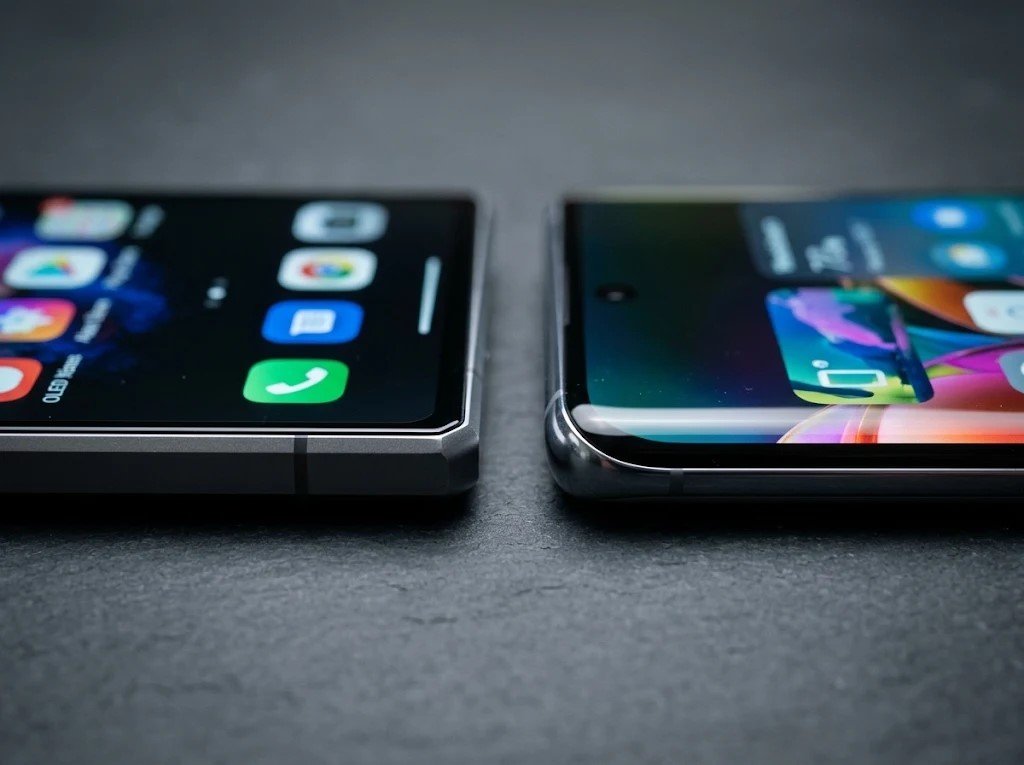
Both devices employ advanced 8T LTPO OLED substrates capable of dynamically shifting refresh rates between 1Hz and 120Hz. However, panel dimensions, resolution densities, and surface geometry differ substantially.
| Display Specification | Xiaomi 15 | OnePlus 13 |
| Panel Surface | Completely Flat | Micro-Quad Curved (Subtle contouring) |
| Screen Diagonal | 6.36 Inches | 6.82 Inches |
| Resolution | 1.5K ($2670 \times 1200$) | 2K QHD+ ($3168 \times 1440$) |
| Pixel Density | 460 PPI | 510 PPI |
| Peak Rated Brightness | 3,200 Nits | 4,500 Nits |
| High Brightness Mode (HBM) | ~1,500 Nits | ~1,600 Nits |
| Color Calibration | Professional Color Curve (sRGB/DCI-P3) | DisplayMate A++ / Natural Color Engine |
| Eye Protection Tuning | DC Dimming + High-Frequency PWM | 2160Hz PWM Dimming + Bright Eyes 2.0 |
The Xiaomi 15 uses a flat 1.5K panel. For gaming and everyday gestures, flat glass eliminates accidental palm touches entirely and accommodates tempered-glass screen protectors easily. At 460 PPI, individual pixels remain imperceptible at standard viewing distances.
The OnePlus 13 delivers a sharper, more cinematic visual experience with its BOE X2 “Oriental Screen” running at 1440p (510 PPI). It supports Dolby Vision and HDR10+ streaming playback with higher peak specular highlights. If reading tiny text, editing 4K footage, or watching cinema content is your primary priority, the OnePlus 13’s larger viewing canvas holds a visible advantage.
Raw Compute & Sustained Gaming Performance
Both devices feature the Qualcomm Snapdragon 8 Elite, incorporating custom Oryon CPU cores (two Prime cores at 4.32 GHz and six Performance cores at 3.53 GHz) and the sliced Adreno 830 GPU.
                SUSTAINED THERMAL THROTTLING OVER 45 MINUTES

  Performance %
  100 +-----------------------------------------------------------+
      | OnePlus 13: Dual-layer VC cooling retains ~78-83% stability
   80 | -----------------------\___________________________________
      |
   60 | Xiaomi 15: Compact volume limits heat dissipation (~68-74%)
      | --------------------\___________________
   40 +-----+---------+---------+---------+---------+---------+---+
      0     5         10        20        30        40        45 Minutes
The Thermal Challenge of Compact Phones
The laws of thermodynamics cannot be cheated by clever software.
The Xiaomi 15 integrates a ring-type cold-pump cooling loop. While brief bursts and short benchmark runs match the highest performance tiers in the industry, continuous 60 FPS gameplay in heavy titles like Genshin Impact or Warzone Mobile causes thermal saturation after 20 minutes. Surface glass reaches $43^\circ\text{C}$ to $45^\circ\text{C}$, triggering stepped CPU clock drops to limit package temperatures.
The OnePlus 13 capitalizes on its larger physical chassis. Equipped with a dual-layer vapor chamber system exceeding 9,900 $\text{mm}^2$, it distributes heat across its broader surface area. In 3DMark Wild Life and Steel Nomad stress tests, the OnePlus 13 maintains a higher stability margin (~80%) without the sharp micro-stutter occasionally observed during sustained thermal saturation on compact hardware.
Optics Shootout: Leica vs. Hasselblad Imaging Pipelines
The camera rivalry pits Xiaomi’s partnership with Leica against OnePlus’s tuning collaboration with Hasselblad. Both use a 50MP + 50MP + 50MP triple-sensor configuration, but their optics and tuning differ significantly.
Camera Hardware Comparison
Xiaomi 15:
Primary: 50MP OmniVision Light Fusion 900 ($1/1.31\text{-inch}$, $f/1.62$, OIS)
Ultra-Wide: 50MP Samsung JN1 ($1/2.76\text{-inch}$, $f/2.2$, 115° FOV)
Telephoto: 50MP Samsung JN5 ($1/2.76\text{-inch}$, $f/2.0$, 60mm equivalent, 2.6x optical, Floating Focus with 10cm macro)
OnePlus 13:
Primary: 50MP Sony LYT-808 ($1/1.43\text{-inch}$, $f/1.6$, 23mm equivalent, OIS)
Ultra-Wide: 50MP Samsung JN5 ($1/2.75\text{-inch}$, $f/2.0$, 120° FOV, Autofocus macro)
Telephoto: 50MP Sony LYT-600 ($1/1.95\text{-inch}$, $f/2.6$, 73mm equivalent, 3x optical periscope, OIS)
Color Science and Tone Mapping
The Leica Aesthetic (Xiaomi 15): Xiaomi lets shooters pick between Leica Authentic (high contrast, deeper shadow roll-offs, zero artificial HDR flattening) and Leica Vibrant. For street photography, environmental portraits, and dramatic architecture, the Leica profile provides distinct, cinematic images straight out of the sensor. The floating-element 2.6x telephoto doubles as a macro lens, capturing close-up textures from just 10 centimeters away.
The Hasselblad Signature (OnePlus 13): OnePlus emphasizes natural color accuracy and broad dynamic range. Skin tones render realistically without aggressive warm-orange shifts. Thanks to its larger periscope telephoto sensor (Sony LYT-600, $1/1.95\text{-inch}$), the OnePlus 13 captures cleaner detail between 3x and 10x zoom levels, particularly in challenging low-light conditions.
Battery Life & Charging: Silicon-Carbon Chemistry at Scale
Both devices embrace high-density silicon-carbon (Si/C) negative electrode batteries, allowing higher capacities without expanding chassis thickness.
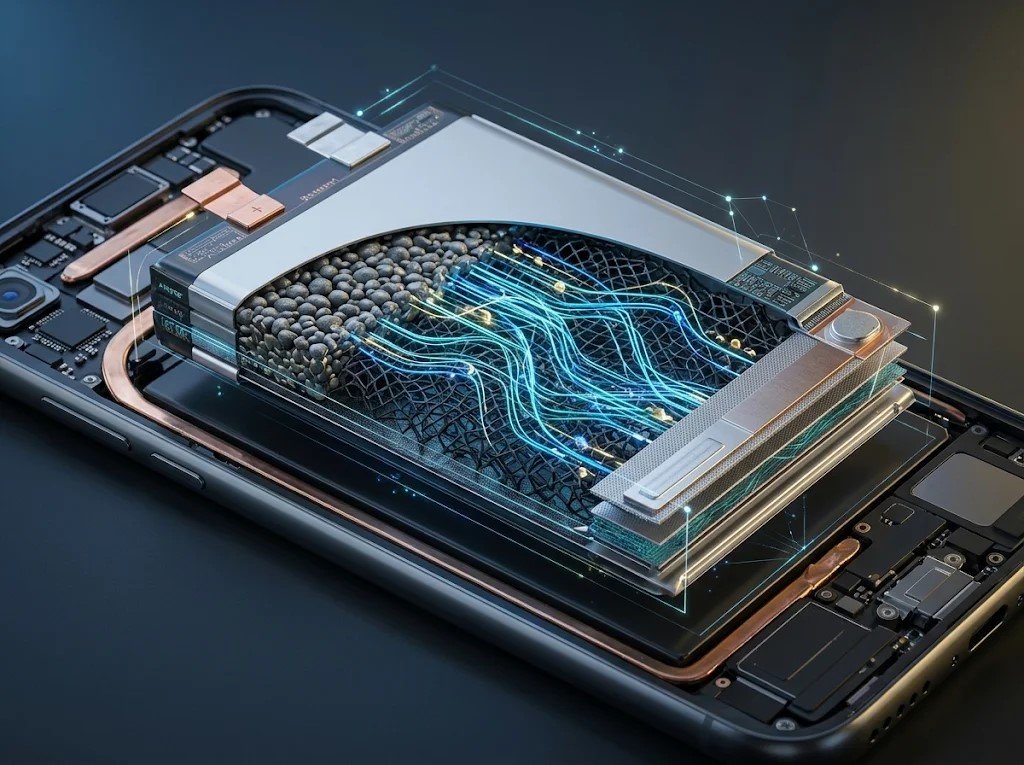
                     BATTERY CELL CAPACITY COMPARISON

  Xiaomi 15      : [======= 5,240 - 5,400 mAh =======]  (Compact standard)
  OnePlus 13     : [============== 6,000 mAh ==============]  (+14% Capacity)
Endurance in Daily Scenarios
OnePlus 13: The massive 6,000mAh battery provides remarkable endurance. Even when driving its large 2K 120Hz display, the OnePlus 13 routinely records 8.5 to 10 hours of active screen-on time. For power users, it easily stretches into two full days of typical use.
Xiaomi 15: Packing a 5,240mAh cell into a sub-6.4-inch chassis represents an engineering achievement. It easily outperforms the smaller cells found in competitors like the Samsung Galaxy S25 or base iPhone 16. However, under continuous 5G data use and navigation, the physical 600–760mAh capacity deficit means it yields roughly 1.5 to 2 hours less total screen time than the OnePlus.
Charging Architecture
Wired Speeds: OnePlus supports 100W SuperVOOC (going from 0% to 100% in roughly 36 minutes), while Xiaomi utilizes 90W HyperCharge (reaching 100% in roughly 40 to 45 minutes). Both chargers are remarkably fast, rendering overnight charging unnecessary.
Wireless Standards: Both support 50W fast wireless charging. However, the OnePlus 13 introduces integrated magnetic case accessories that support snap-on Qi2-style alignment and magnetic power banks.
Software Experience: HyperOS 2.0 vs. OxygenOS 15
Software performance and long-term operating system updates heavily impact daily satisfaction.
HyperOS 2.0 (Xiaomi 15)
Xiaomi redesigned its underlying kernel scheduler under HyperOS 2.0, substantially smoothing out micro-animations, app launch latency, and background thread allocation.
Pros: Deep cross-device ecosystem integration (linking seamlessly with Xiaomi tablets, PCs, smart home appliances, and even the SU7 EV series); expressive lock-screen typography and widget customization.
Cons: System software still contains occasional pre-installed bloatware depending on the distribution market. Disabling background recommendations requires manually toggling off multiple deep settings menus.
OxygenOS 15 (OnePlus 13)
OxygenOS 15 (sharing its technical codebase with ColorOS 15) emphasizes fluidity and near-zero visual latency.
Pros: Exceptionally clean out-of-the-box setup. Parallel processing algorithms allow open animations and gestures to run independently without interrupting underlying apps. The Alert Slider remains an intuitive hardware switch for managing sound and notification profiles.
Cons: Some classic stock Android styling has been replaced by iOS-inspired control centers and blurred menus.
Update Roadmaps: Both manufacturers commit to four major Android OS upgrades and five to six years of security patches, keeping both devices reliably supported into 2030 and beyond.
Durability, Biometrics, and Hardware Extras
The OnePlus 13 introduces an important durability advancement: dual IP68 and IP69 certification. While IP68 protects against continuous immersion under 1.5 meters of water, the IP69 rating shields the device against high-pressure, high-temperature water jets. The Xiaomi 15 features standard IP68 protection, which remains robust for accidental spills and rain immersion.
Biometrics: The Ultrasonic Shift
Both manufacturers replaced optical in-display fingerprint sensors with ultrasonic scanners.
Unlocking occurs instantaneously without blinding flashes of white light in dark rooms.
Wet or oily fingers authenticate accurately, eliminating a frequent pain point of older optical modules.
Detailed Head-to-Head Specification Matrix
| Metric / Feature | Xiaomi 15 | OnePlus 13 | Winner |
| Chassis Dimensions | $152.3 \times 71.2 \times 8.08\,\text{mm}$ | $162.9 \times 76.5 \times 8.5\,\text{mm}$ | Xiaomi 15 (Portability) |
| Device Weight | 191 g | 210 g – 213 g | Xiaomi 15 |
| Water / Dust Resistance | IP68 (1.5m immersion) | IP68 + IP69 (High-pressure water jets) | OnePlus 13 |
| Display Dimensions | 6.36-inch Flat AMOLED | 6.82-inch Quad-Curved AMOLED | Tie (Personal preference) |
| Panel Resolution | 1.5K ($2670 \times 1200$, 460 PPI) | 2K QHD+ ($3168 \times 1440$, 510 PPI) | OnePlus 13 |
| Processor Platform | Qualcomm Snapdragon 8 Elite (3nm) | Qualcomm Snapdragon 8 Elite (3nm) | Tie |
| Sustained Gaming Thermals | Reaches thermal limits faster | Cooler surface, larger dual VC loop | OnePlus 13 |
| Main Camera Sensor | 50MP Light Fusion 900 ($1/1.31″$) | 50MP Sony LYT-808 ($1/1.43″$) | Xiaomi 15 (Aperture/Light) |
| Telephoto Camera | 50MP 2.6x Floating Macro Lens | 50MP 3x Periscope Zoom (LYT-600) | Tie (Macro vs. Range) |
| Color Partnership | Leica Authentic & Vibrant | Hasselblad Color Calibration | Tie (Artistic vs. Natural) |
| Battery Capacity | 5,240 – 5,400 mAh | 6,000 mAh | OnePlus 13 (+14%) |
| Wired / Wireless Speeds | 90W Wired / 50W Wireless | 100W Wired / 50W Wireless | OnePlus 13 |
| Software Platform | HyperOS 2.0 (Android 15) | OxygenOS 15 (Android 15) | OnePlus 13 (Cleaner bloat) |
Frequently Asked Questions
Which phone is better for one-handed operation?
The Xiaomi 15 is vastly superior for one-handed usability. With its 6.36-inch screen, 71.2mm width, and 191g weight, your thumb can traverse nearly the entire interface without awkward grip adjustments. The OnePlus 13 is a broad two-handed device designed for immersive media.
Does the OnePlus 13 take better zoom photos than the Xiaomi 15?
Yes, across mid-to-long distances (5x to 15x), the OnePlus 13’s larger Sony LYT-600 periscope sensor preserves sharper edge definition and lower noise. However, for close-up portraits and macro photography, the Xiaomi 15’s floating-element telephoto lens focuses down to 10cm, capturing intricate macro textures that standard periscopes cannot resolve.
Does the Xiaomi 15 overheat when playing games?
The Xiaomi 15 does not overheat dangerously, but because of its smaller chassis volume, it warms up faster during extended sessions of heavy games like Genshin Impact. To prevent throttling, you may need to reduce settings from Ultra to High, whereas the OnePlus 13 dissipates heat more effectively over 45+ minute matches.
What is the advantage of the OnePlus 13’s IP69 rating?
Most standard water-resistant phones carry an IP68 rating, which certifies protection against standing water submersion up to 1.5 meters. The additional IP69 rating on the OnePlus 13 certifies resistance to high-temperature, high-pressure steam and pressurized water jets, providing superior resistance against harsh exposure.
Can the Xiaomi 15 battery last two full days?
For light-to-moderate users (browsing, chat, audio streaming), the 5,240mAh silicon-carbon battery can reach nearly two days. However, for power users running continuous navigation, camera capture, and 5G connections, the OnePlus 13’s 6,000mAh pack provides noticeably more headroom at the end of a long day.
Do both phones come with ultrasonic fingerprint scanners?
Yes. Both the Xiaomi 15 and OnePlus 13 upgrade to in-display ultrasonic fingerprint sensors. They authenticate rapidly, don’t require an optical flash in dark settings, and work reliably even with damp fingers.
Is wireless charging supported on both phones?
Yes. Both phones support 50W proprietary fast wireless charging along with standard Qi charging. The OnePlus 13 also supports snap-on magnetic accessories when paired with compatible cases.
Which phone offers cleaner software without bloatware?
OnePlus 13’s OxygenOS 15 offers a cleaner user experience out of the box, with fewer pre-installed utilities and third-party prompts. Xiaomi’s HyperOS 2.0 is smooth and feature-rich, but includes more pre-installed apps and marketing notifications that require manual adjustment.
Final Verdict: Which Smartphone Should You Buy?
Choosing between the Xiaomi 15 and the OnePlus 13 comes down to physical ergonomics versus heavy media consumption:
Choose the Xiaomi 15 if: You want a premium, pocket-friendly compact flagship. If you are tired of bulky phones and want a flat display, comfortable one-handed use, distinctive high-contrast Leica street photography, and a macro-capable telephoto lens—without compromising on top-tier Snapdragon 8 Elite performance—the Xiaomi 15 is one of the best compact Android phones on the market.
Choose the OnePlus 13 if: You are a power user, mobile gamer, or media enthusiast. With its larger 2K display, expansive 6,000mAh silicon-carbon battery pack, superior thermal dissipation over long gaming sessions, periscope zoom reach, and rugged IP68/IP69 environmental armor, the OnePlus 13 delivers a comprehensive big-screen experience for the price.