
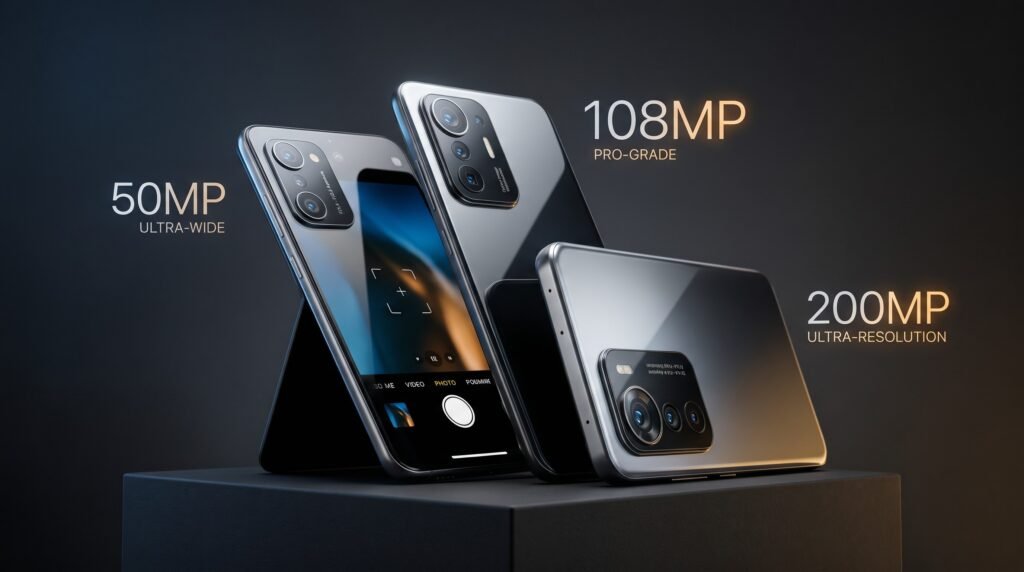
Smartphone camera marketing has turned megapixel counts into a numbers game. A 108MP or 200MP badge looks impressive on a specification sheet, especially when compared with a phone offering “only” 50MP. But a larger number does not automatically produce better photos. In real-world photography, sensor size, pixel size, lens aperture, image processing, and pixel binning often matter more than the maximum resolution a camera can capture.
This guide explains megapixels vs. sensor size in smartphone cameras and shows why a well-designed 50MP camera can outperform a 200MP camera. If you are comparing phones before buying, understanding these differences will help you look beyond headline specifications.
What Do Megapixels Actually Mean?
A megapixel is one million pixels. A 50MP camera records an image containing approximately 50 million individual pixels, while a 200MP camera can record roughly four times as many. More megapixels can provide more detail in ideal conditions and give you additional flexibility when cropping an image.
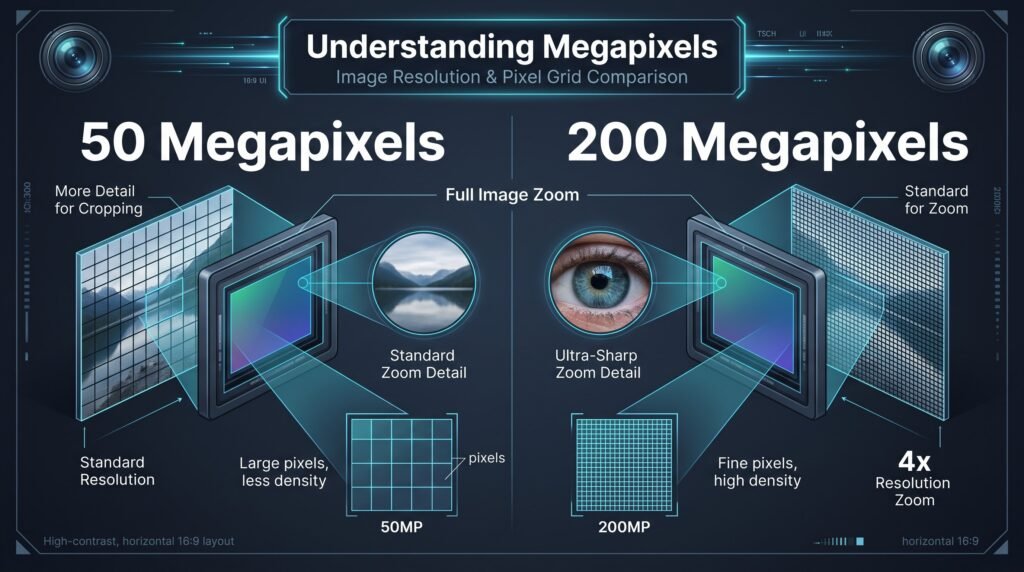
However, megapixels describe resolution, not overall image quality. They do not tell you how much light the camera captures, how accurately it reproduces color, how much noise appears in a dark scene, or how well the phone processes the image. A high-resolution sensor paired with a small physical sensor and a narrow lens can still produce noisy, soft, or unnatural photos.
High megapixel modes can also create very large files. Those files use more storage and may take longer to process or share. In many situations, phones do not use the sensor’s full resolution by default. Instead, they combine neighboring pixels to create a smaller image with improved brightness and reduced noise.
Why Sensor Size Matters in a Mobile Camera
Sensor size refers to the physical area of the imaging sensor behind the lens. A larger sensor can collect more light during the same exposure than a smaller sensor, assuming other conditions are comparable. That extra light can improve image quality in several important ways.
- Better low-light performance: More captured light generally means less visible noise in night scenes and indoor photos.
- Improved dynamic range: A larger sensor can help preserve detail in bright skies and dark shadows at the same time.
- More natural image quality: Fine textures, skin tones, and subtle color transitions can look cleaner and more realistic.
- Stronger background separation: Depending on the lens and design, a larger sensor can create a more natural depth-of-field effect.
This is why the question “Does more megapixels mean better photo quality?” has a simple answer: not by itself. Resolution is only one part of the imaging system. A lower-resolution sensor with larger pixels and better light-gathering ability may produce a cleaner photograph than a higher-resolution sensor that struggles with light.
Pixel Size and the Trade-Off Behind High Resolution
When manufacturers place more pixels on a sensor without making the sensor physically larger, each individual pixel usually becomes smaller. Small pixels can capture less light individually, which may increase noise and reduce performance in dim conditions.
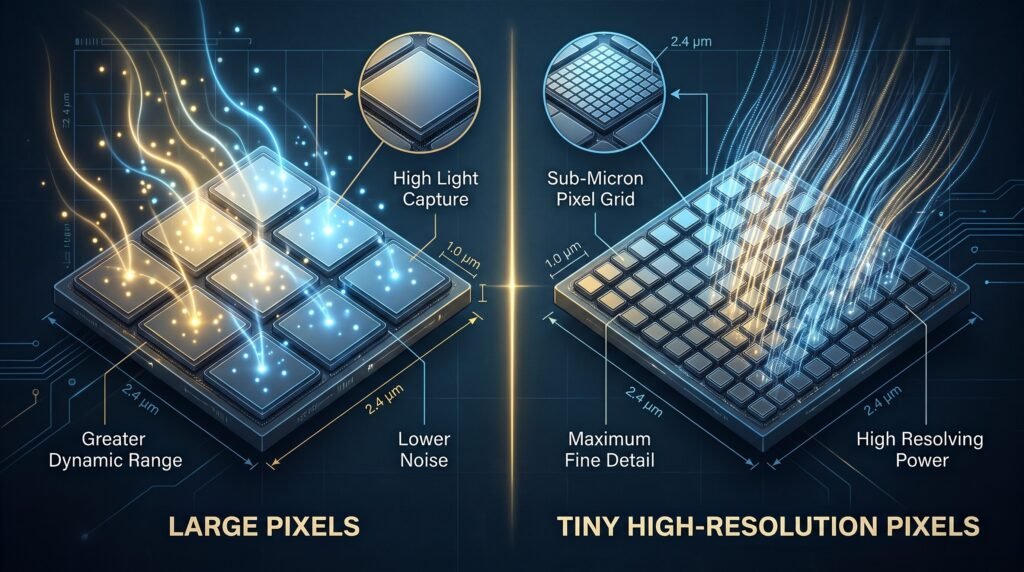
This does not make high-megapixel sensors useless. Modern sensors use advanced designs and software to compensate for some of these limitations. However, a 200MP sensor does not automatically have four times the real-world detail of a 50MP sensor. Lens quality, focus accuracy, motion, lighting, and image processing can limit the detail captured long before the megapixel count becomes the deciding factor.
There is also a practical limit to the amount of detail a small smartphone lens can resolve. If the lens, stabilization system, or processing pipeline cannot preserve the extra information, the additional pixels may contribute little to the final image.
Pixel Binning Explained
Pixel binning is a technique that combines data from multiple neighboring pixels into one larger effective pixel. For example, a 200MP sensor may combine four pixels into a 50MP image, or combine sixteen pixels into a 12.5MP image, depending on the sensor and camera software.
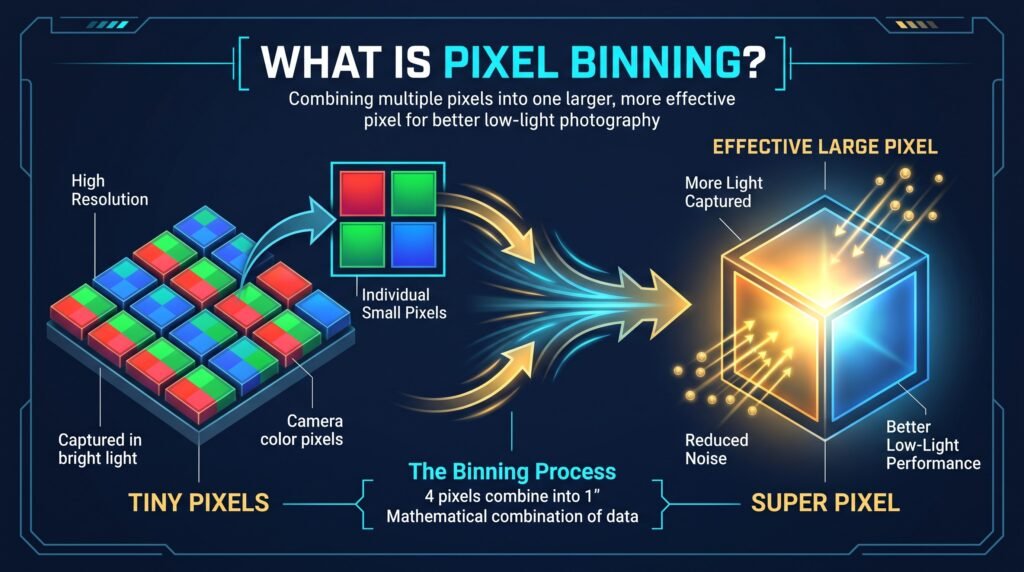
The purpose is to improve the balance between detail and light capture. A full-resolution image may provide more information in bright daylight, while a binned image can offer better brightness and lower noise in ordinary or low-light conditions.
Pixel binning explained simply: instead of treating every tiny pixel as completely independent, the phone groups pixels together to create a stronger signal. The result is often a smaller file with better exposure and more consistent colors.
Many smartphone cameras use a binned output as the default because it is more practical for everyday photography. The phone may advertise 200MP, but most users may spend most of their time taking 12.5MP, 25MP, or 50MP photos. This is not necessarily misleading; it reflects how the sensor is designed to work best across different lighting conditions.
Why a 50MP Camera Can Beat a 200MP Camera
A 50MP camera can outperform a 200MP camera when it uses a larger sensor, larger effective pixels, a wider aperture, better stabilization, or stronger image processing. The 50MP camera may gather more usable light and produce a cleaner source image before software enhancement begins.
Consider two phones. The first uses a 50MP sensor with a relatively large surface area and a high-quality lens. The second uses a 200MP sensor that is physically smaller and relies on aggressive sharpening and noise reduction. In daylight, the 200MP phone may capture impressive detail in a controlled shot. In a restaurant, at night, or when a subject is moving, the 50MP phone may deliver a more balanced and natural image.
High-resolution modes also often require steady hands and good lighting. Slight movement can make fine details appear less sharp. A lower-resolution binned image may look better because it is less sensitive to motion and produces a more stable exposure.
The Role of Lens Aperture
Lens aperture describes how much light can pass through the lens. A wider aperture, represented by a smaller f-number, allows more light to reach the sensor. This can support faster shutter speeds, brighter images, and less motion blur in challenging conditions.

Aperture is not the only factor that matters, but it is an important part of the complete camera system. A high-megapixel sensor paired with a lens that limits light may not perform as well as a lower-megapixel sensor with a larger sensor and wider aperture.
Lens quality also affects sharpness and contrast. If the lens introduces softness or distortion, increasing the number of pixels will not fully correct the problem. When comparing smartphones, look at sensor size and aperture together rather than treating megapixels as the complete camera specification.
Image Processing Can Change the Final Result
Smartphone photography depends heavily on computational photography. The phone may combine multiple exposures, reduce noise, recover highlights, sharpen edges, improve faces, and adjust colors before saving the image.
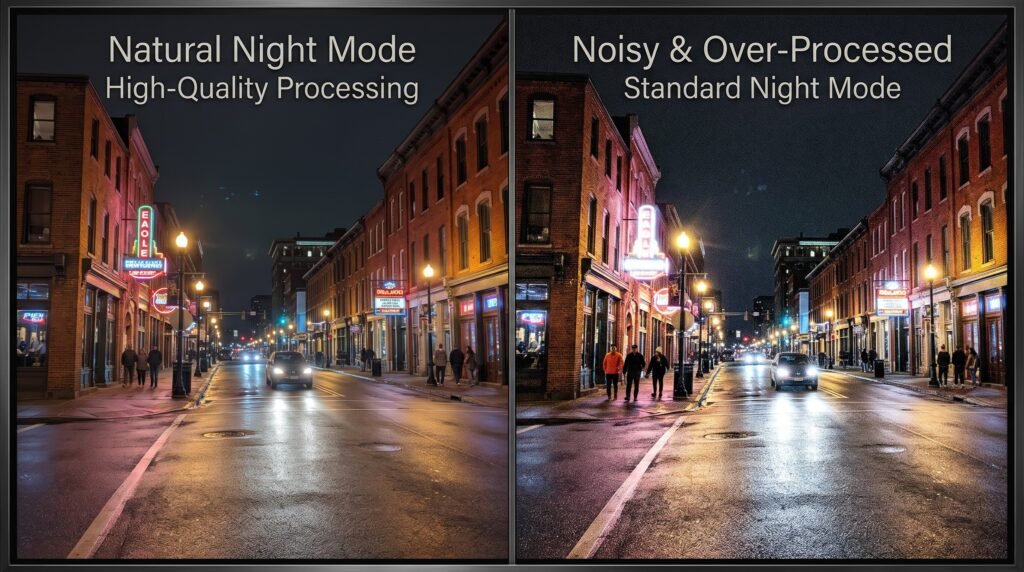
Good processing can make a modest camera perform impressively. Poor processing can make a technically capable sensor look disappointing. Excessive sharpening may create halos around objects, while aggressive noise reduction can remove natural textures. Different brands also have different color preferences, so two phones with similar hardware may produce noticeably different results.
Raw sensor specifications are therefore only part of the buying decision. Reviews that include daylight, indoor, portrait, night, and moving-subject samples are often more useful than a specification table alone.
What Is the Best Camera Sensor Size for Smartphones?
There is no single best camera sensor size for every smartphone. A larger sensor is generally beneficial because it can collect more light, but it also requires more physical space. A phone manufacturer must balance camera performance with thickness, battery capacity, lens design, stabilization, heat management, and cost.
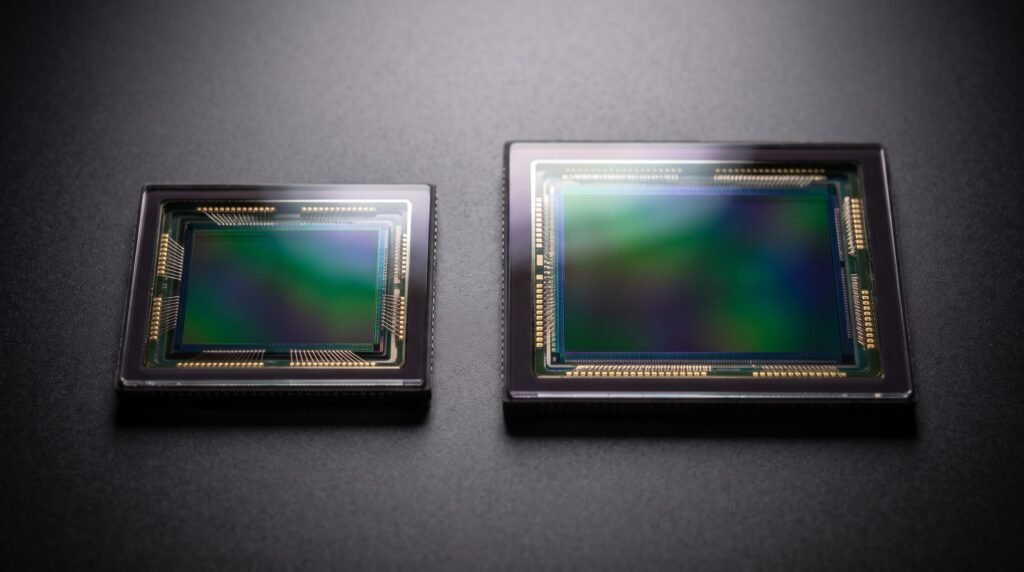
The best choice depends on your priorities. If you frequently take night photos, indoor images, portraits, or moving subjects, prioritize a larger main sensor and reliable stabilization. If you mainly photograph landscapes in bright daylight and crop images afterward, resolution may be more valuable. For most users, a well-balanced main camera with a reasonably large sensor will be more useful than an extremely high megapixel count.
How to Compare Smartphone Camera Specifications
When comparing phone cameras, use this checklist:
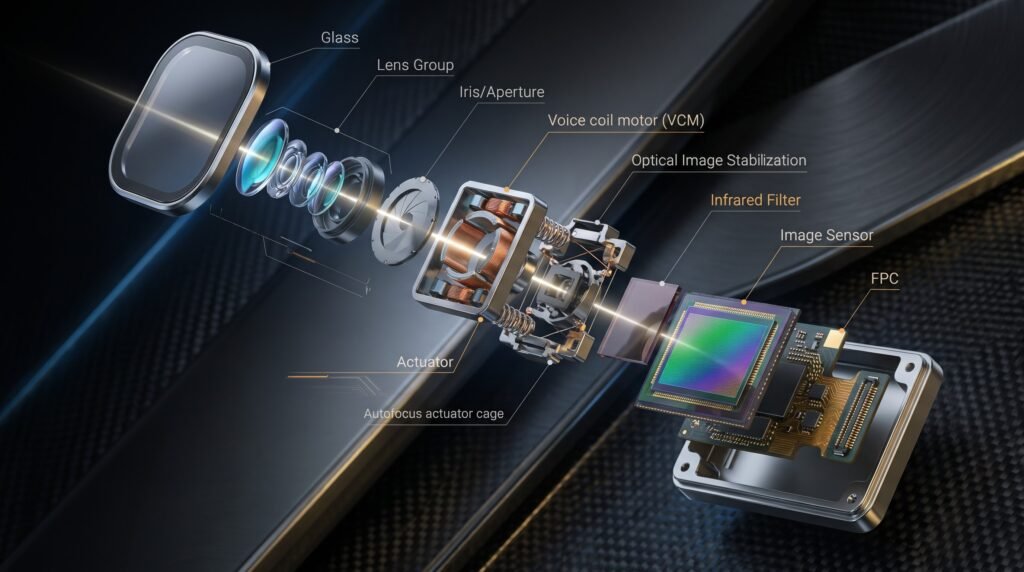
- Check the main sensor size: Choose a larger sensor when low-light performance matters.
- Check the effective output resolution: See whether the camera typically saves binned photos instead of full-resolution images.
- Compare aperture and stabilization: A wide aperture and optical stabilization can make a major difference.
- Review sample photos: Pay attention to shadows, highlights, skin tones, fine textures, and night scenes.
- Consider autofocus: Fast and accurate focusing is essential for children, pets, sports, and street photography.
- Evaluate all cameras: A strong main camera is useful, but ultrawide and telephoto quality also affect the overall experience.
Final Verdict: Megapixels Are Not the Whole Story
Megapixels matter, but they should not be the main way you judge a smartphone camera. They can provide additional cropping flexibility and fine detail in favorable conditions, yet sensor size, pixel size, aperture, stabilization, autofocus, and image processing often have a greater effect on everyday results.
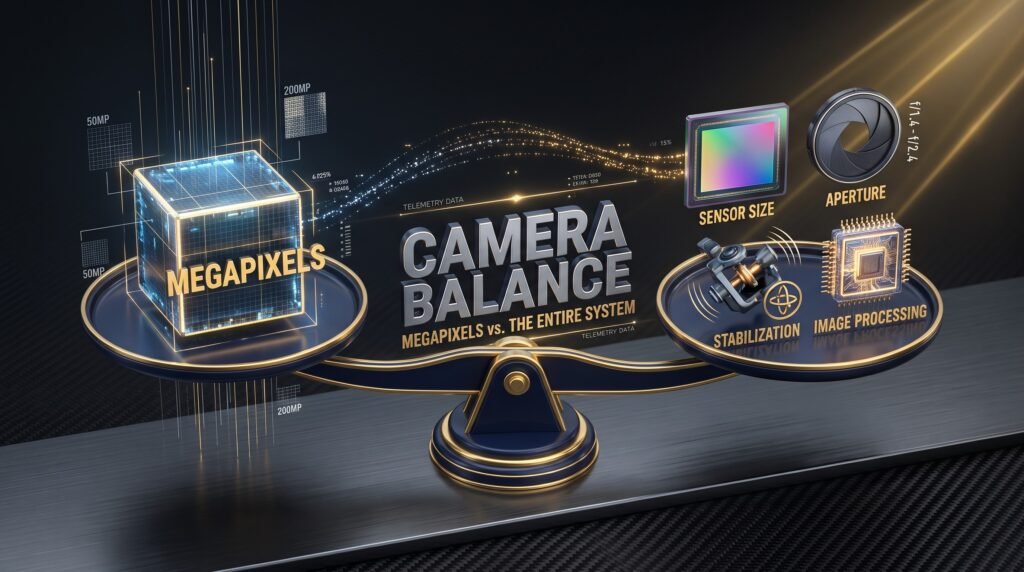
A 50MP camera with a larger sensor and better optics can beat a 200MP camera with smaller pixels and weaker light-gathering ability. Instead of asking which phone has the highest number, ask which phone captures the most usable light and produces the most natural photos in the situations you actually encounter.
When shopping for a smartphone, treat megapixels as one specification among many. The best camera is not necessarily the one with the biggest number on the box. It is the camera system that consistently delivers sharp, balanced, detailed photos across daylight, indoor, and low-light conditions.